
UNDERSTANDING HIDDEN POWER LOSSES IN CABLES, CONTROLLERS, AND CONNECTIONS
15th Apr 2026
Many off-grid solar systems are sized around panel wattage and battery capacity, but real-world performance depends just as much on how efficiently that power moves through the system. A setup may look strong on paper and still underperform because some of the available energy is lost before it ever reaches the battery or the load. These hidden losses often come from cables, controllers, and connection points that do not get enough attention during the design stage.
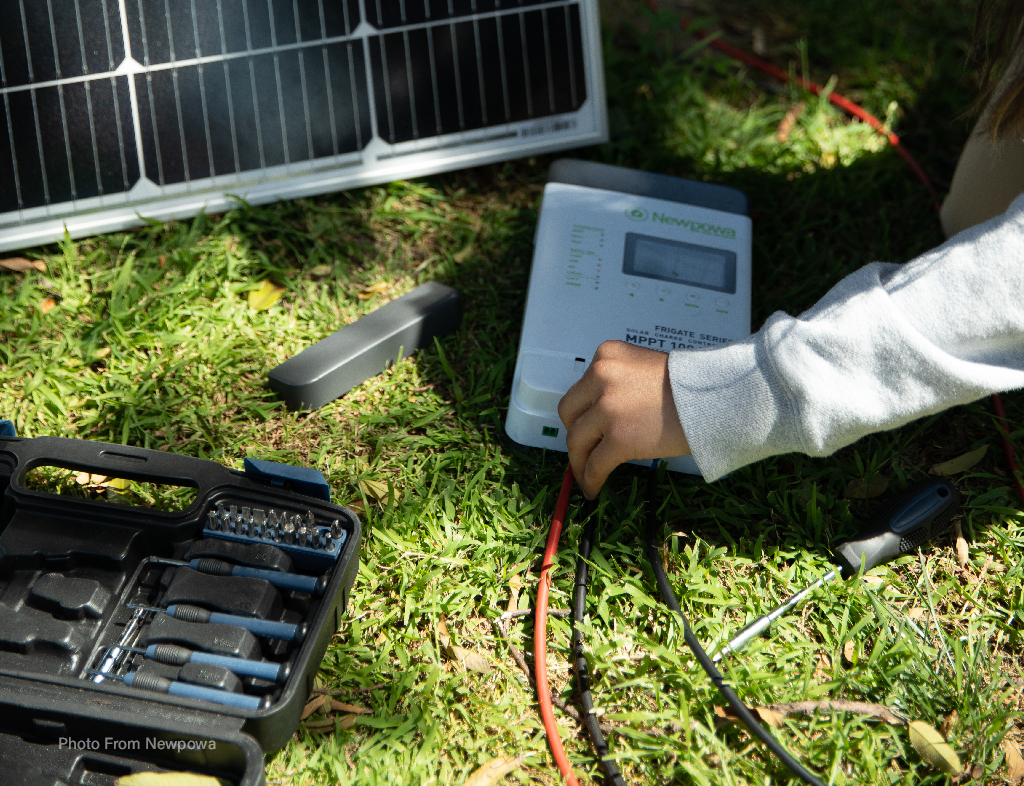
One of the most common sources of wasted power is voltage drop in the wiring. Whenever electricity travels through a cable, some energy is lost as resistance. The longer the cable run and the smaller the wire, the greater that loss becomes. In off-grid systems, this matters because even a modest voltage drop can reduce charging performance and leave less usable power for appliances. A system may technically have enough solar capacity, but poor cable sizing can prevent that energy from being delivered efficiently. This is especially noticeable in lower-voltage systems, where each volt carries more weight and losses become proportionally more significant.
Power loss also builds across system components. Solar panels do not feed loads directly in most off-grid setups. The energy usually passes through charge controllers, batteries, inverters, fuses, breakers, and wiring before it is finally used. Each step introduces some inefficiency. Even when every component is working normally, the combined effect can be meaningful. A design that assumes all generated power is fully available at the end use point often overestimates real performance. That is why system planning should look beyond rated output and consider how much energy is likely to remain after conversion and transfer losses.
Connections are another overlooked weak point. Loose terminals, undersized lugs, corroded contacts, or poorly crimped connectors can create resistance that turns useful power into heat. In some cases, the issue is not dramatic enough to cause an immediate failure, but it slowly reduces charging efficiency and overall system reliability. A weak connection can also create inconsistent performance that is difficult to diagnose, especially when the rest of the equipment appears properly sized. Good power delivery depends not only on major components, but also on the quality of every junction between them.

Designing for efficiency means thinking beyond headline capacity numbers. Adding more panel wattage or more battery storage does not always solve a performance problem if the system is losing energy along the way. In many cases, better cable routing, proper wire sizing, solid connection practices, and realistic expectations about component losses will improve results more effectively than simply making the system larger. An efficient off-grid solar system is not just one that can produce enough power, but one that can preserve as much of that power as possible from generation to final use.