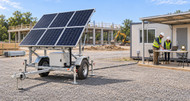
Solar Power for Mobile Work Trailers: Bringing Electricity to the Jobsite
26th Nov 2026
A construction project rarely begins with everything in place. Before a permanent electrical connection is available, workers may already need lighting, computers, communication equipment, and a comfortable place to organize the day's work.
Mobile work trailers help provide that space. They can serve as temporary offices, equipment rooms, workshops, or field-operation centres. But their usefulness often depends on one thing that is not always easy to find at a remote jobsite: reliable electricity.
Generators remain a familiar solution, but they are not ideal for every situation. Fuel needs to be stored and replenished, equipment requires maintenance, and continuous operation can create noise. For applications with more moderate electrical requirements, solar power offers another option.
Not every work trailer needs the same amount of power
A mobile office used for laptops, lighting, and communication equipment has very different requirements from a workshop operating power tools throughout the day.
That distinction should shape the entire solar design.
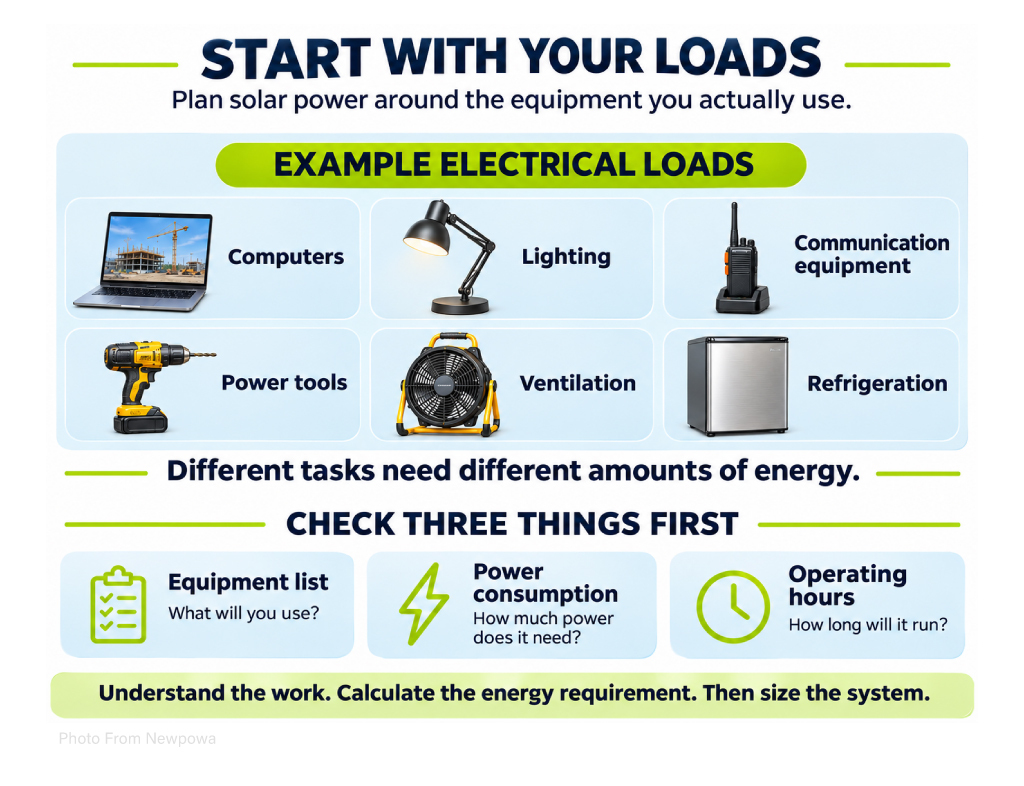
The first step is to identify what equipment will actually be used inside the trailer. A list of appliances, their power consumption, and expected operating hours gives a much more useful starting point than choosing panels based on available roof space alone.
A few LED lights and charging outlets may require a relatively modest system. Refrigeration, ventilation, computers, and other equipment can increase daily energy consumption considerably.
The important question is not simply how much power the panels can generate, but whether that energy will be enough to support the work being done.
The roof becomes part of the energy plan
A work trailer may offer a convenient mounting surface for solar panels, but available space is rarely unlimited.
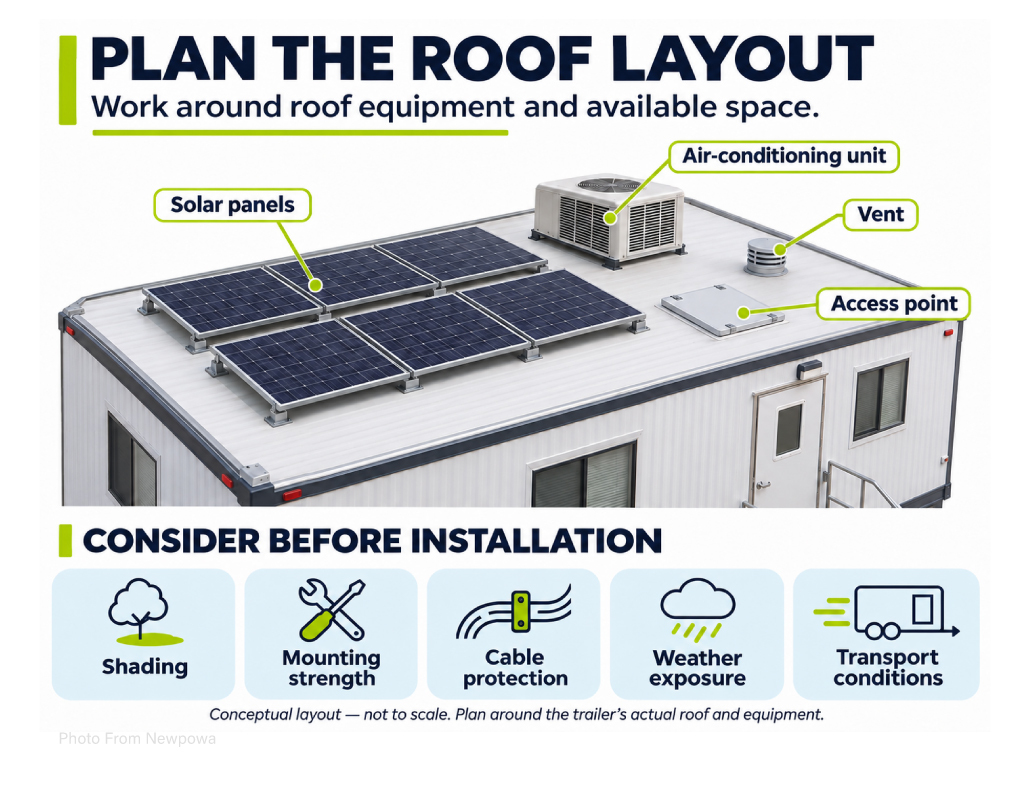
Roof dimensions, vents, air-conditioning units, access points, and other equipment can restrict the area available for installation. The trailer may also move between locations, making secure mounting and cable protection particularly important.
Rigid solar panels can be suitable where there is sufficient space and structural support. Projects with unusual dimensions or specialized requirements may benefit from evaluating custom panel options.
Whatever the panel type, the design should account for shading, mounting strength, weather exposure, and the conditions the trailer will experience during transportation.
Batteries make the system useful beyond daylight hours
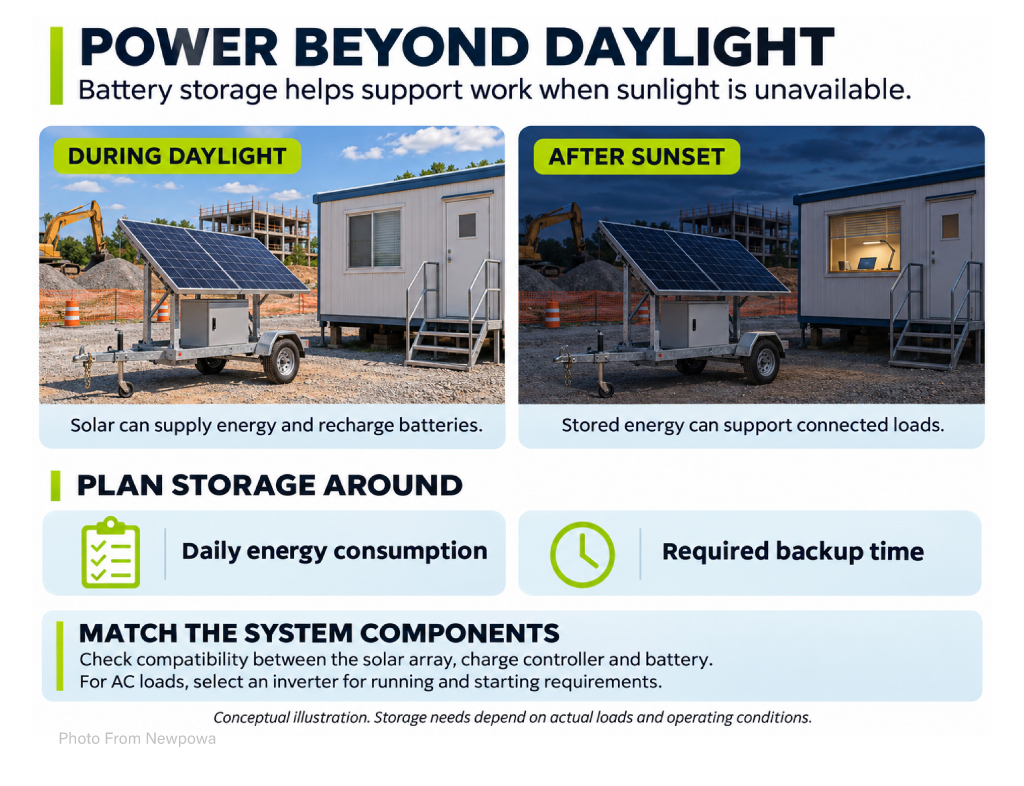
Solar panels generate electricity when sunlight is available. A work trailer, however, may need power before sunrise, after sunset, or during periods of poor weather.
Battery storage helps bridge this gap.
The amount of storage required depends on daily energy consumption and how much backup time the system needs. A trailer used for occasional daytime work may have very different requirements from one operating as a full-time field office.
The charge controller and battery must also be compatible with the solar array. If AC equipment is required, an inverter may be needed, with its capacity selected according to the connected loads and their starting requirements.
Solar and generators don't have to be competing solutions
It is easy to frame the choice as solar versus generator, but some mobile applications may benefit from using both.
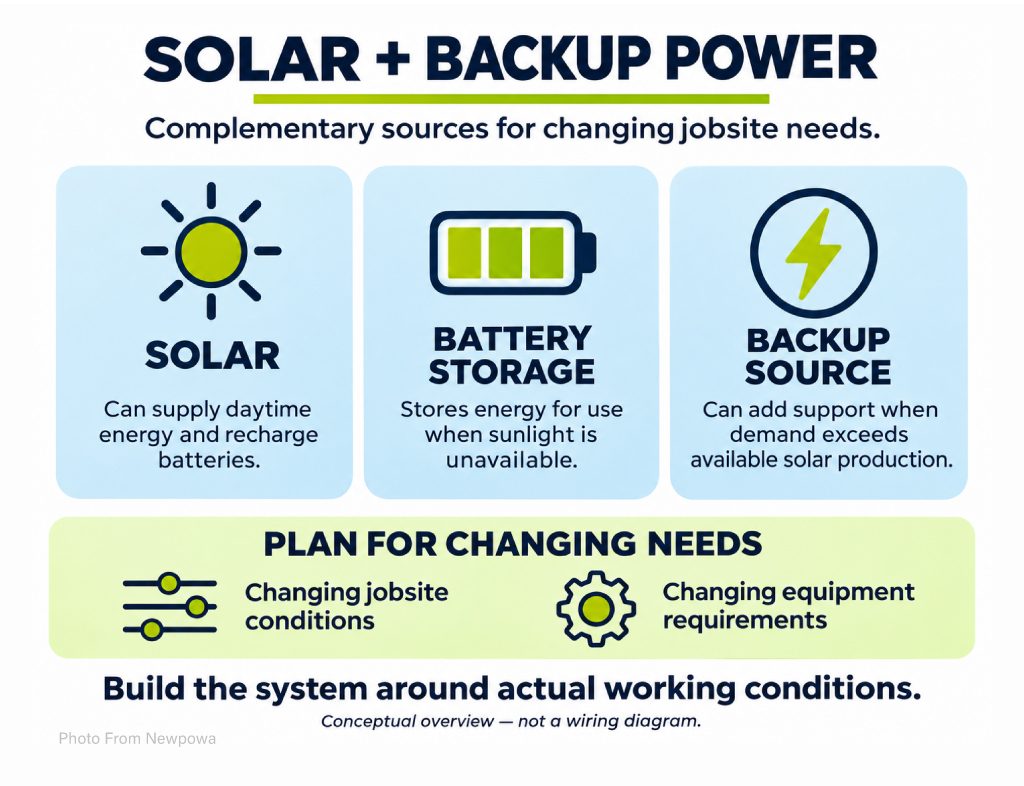
Solar can supply energy during the day and recharge the battery bank, while a generator or another charging source can provide additional support when demand exceeds available solar production.
This approach may be particularly useful when jobsite conditions change or when equipment requirements are difficult to predict.
The objective is not necessarily to eliminate every other power source. It is to build a system that provides practical electricity with the least unnecessary complexity.
A more flexible way to work away from the grid
Mobile work trailers are becoming increasingly versatile. They can support construction crews, maintenance teams, event operations, agricultural work, and other activities where a permanent building is unavailable.
Solar power can make these spaces more independent, particularly when the electrical loads are well understood and the system is designed around actual working conditions.
A successful installation starts with a simple exercise: understand the work, calculate the energy requirement, and build the solar system around it.