
MC4 Connectors, Adapters, and Extension Cables: The Connections Behind a Solar System
25th Nov 2026
A solar installation can look almost complete before the first electrical connection is made. The panels are mounted, the battery is in place, and the charge controller is ready. Then comes a surprisingly common problem: the cables don't quite reach, the connectors don't match, or the installation needs an additional connection that wasn't considered when the equipment was purchased.
These are small details, but they can bring an otherwise straightforward project to a halt.
Solar connectors and accessories rarely receive the same attention as panels or batteries. Yet they determine how the different parts of a system are connected, how easily the installation can be completed, and whether the components are compatible.
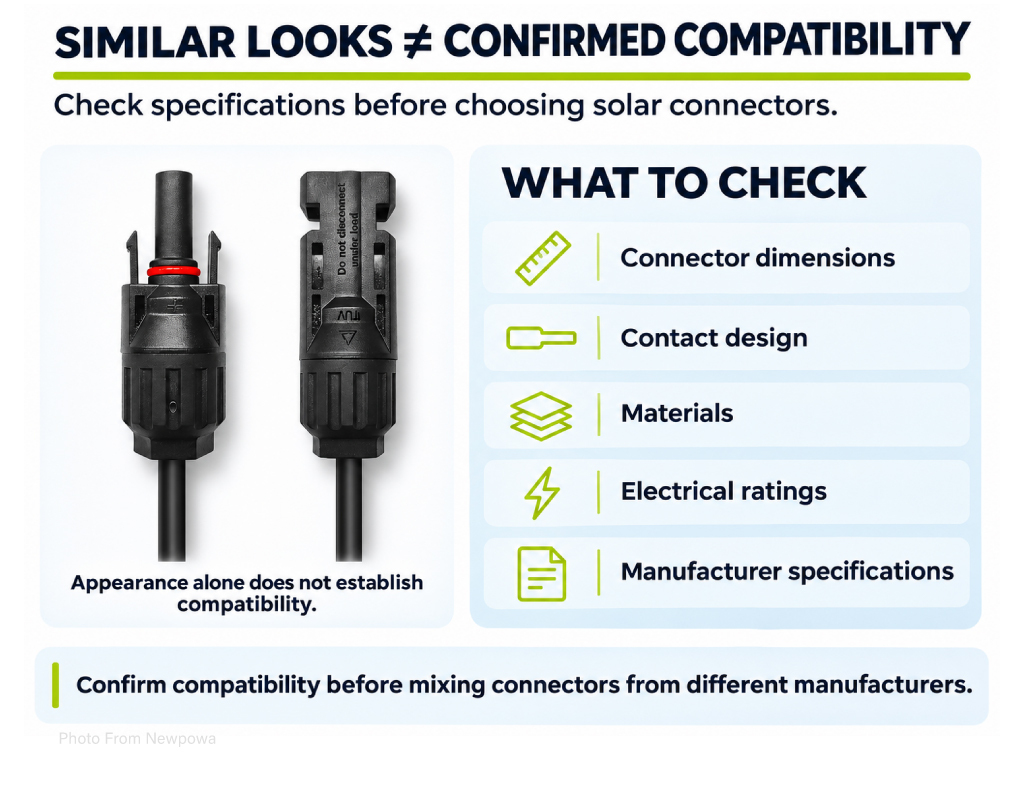
The familiar connector on the back of a solar panel
MC4-style connectors have become widely used in photovoltaic installations. They are designed to provide a locking connection between compatible solar cables and components, making them common on residential, mobile, and off-grid solar equipment.
Their popularity also means that buyers often assume all MC4-looking connectors are interchangeable.
That assumption deserves some caution.
Physical appearance alone does not establish compatibility. Connector dimensions, contact design, materials, electrical ratings, and manufacturer specifications all matter. Mixing connectors from different manufacturers without confirming compatibility can create unreliable connections.
When planning an installation, it is worth checking the connector specifications before ordering additional cables or adapters.
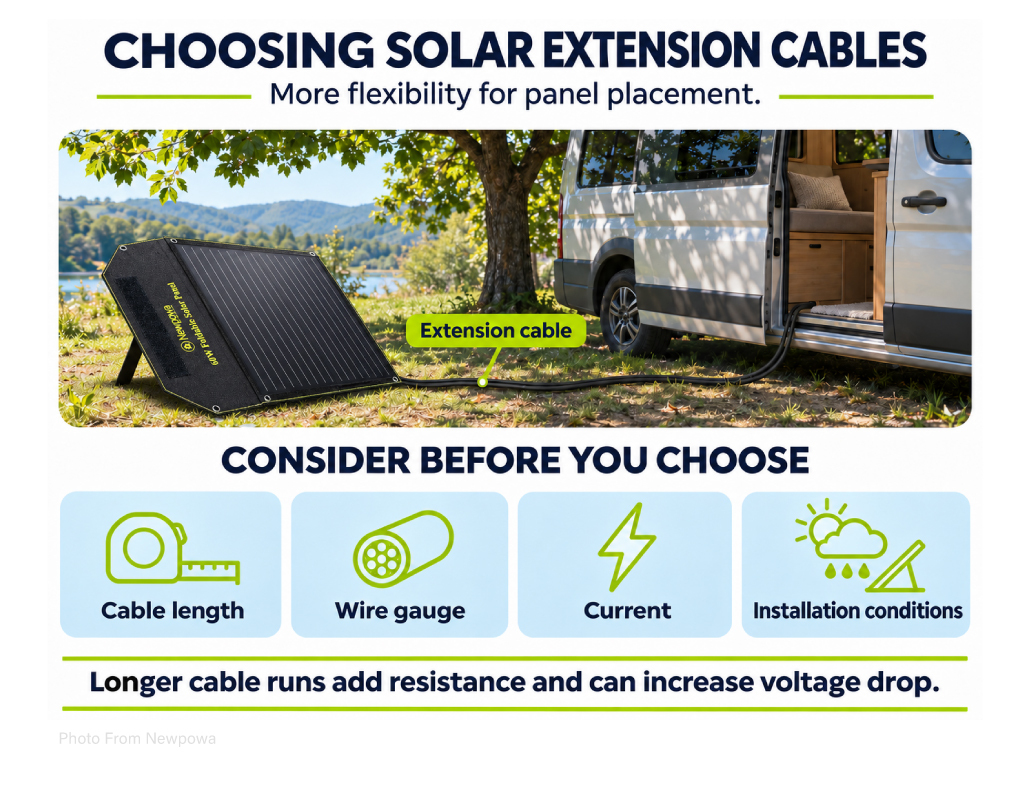
When a few extra metres make a difference
On a compact installation, the solar panels may be close to the charge controller. On an RV, boat, or cabin, the most suitable panel location may be some distance away from the electrical equipment.
This is where extension cables become useful.
They allow the panels to be positioned where sunlight is more accessible without forcing the charge controller or battery to sit directly beside them. Portable solar installations benefit from this flexibility as well, particularly when panels need to be placed away from a vehicle to avoid shade.
But adding cable length is not simply a matter of choosing the longest available option. Longer cable runs introduce additional resistance and can increase voltage drop. Cable gauge, current, and installation conditions should all be considered when selecting an extension.
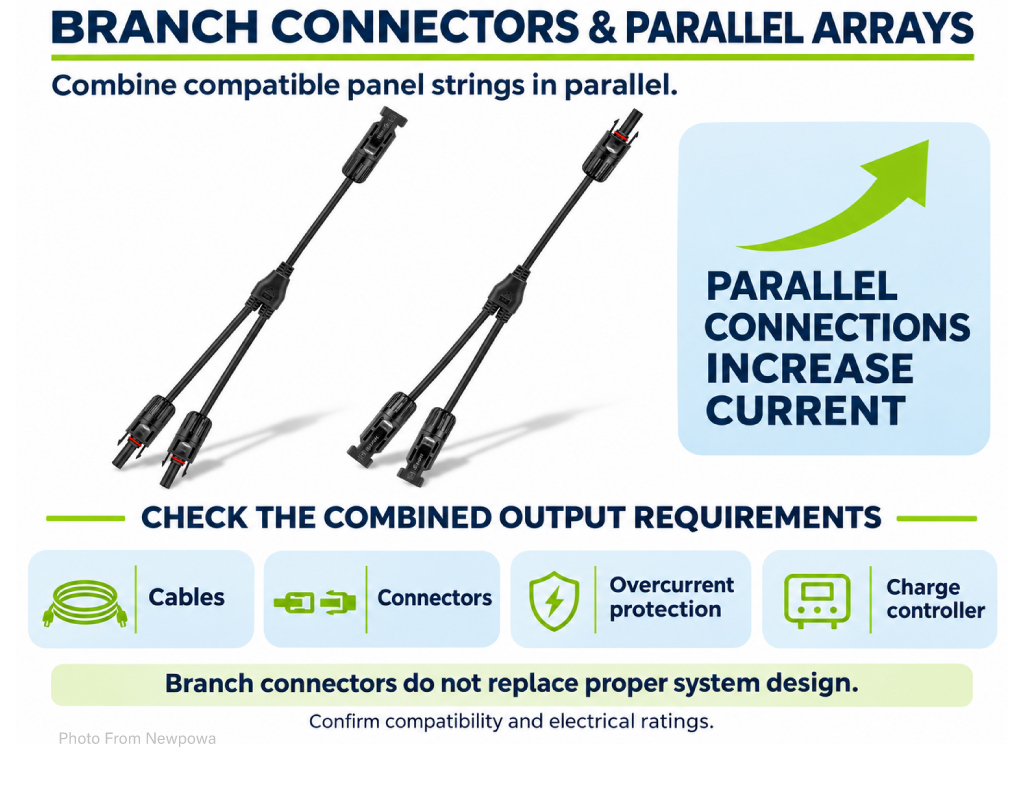
Why some installations need branch connectors
A single solar panel is relatively straightforward to connect. A system using multiple panels requires more planning.
In certain configurations, branch connectors allow compatible panel strings to be combined in parallel. This can simplify the physical wiring arrangement, but it also changes the electrical characteristics of the combined output.
When panels are connected in parallel, current increases. The cables, connectors, overcurrent protection, and charge controller must all be rated for the resulting electrical conditions.
A connector should never be treated as a substitute for proper system design.
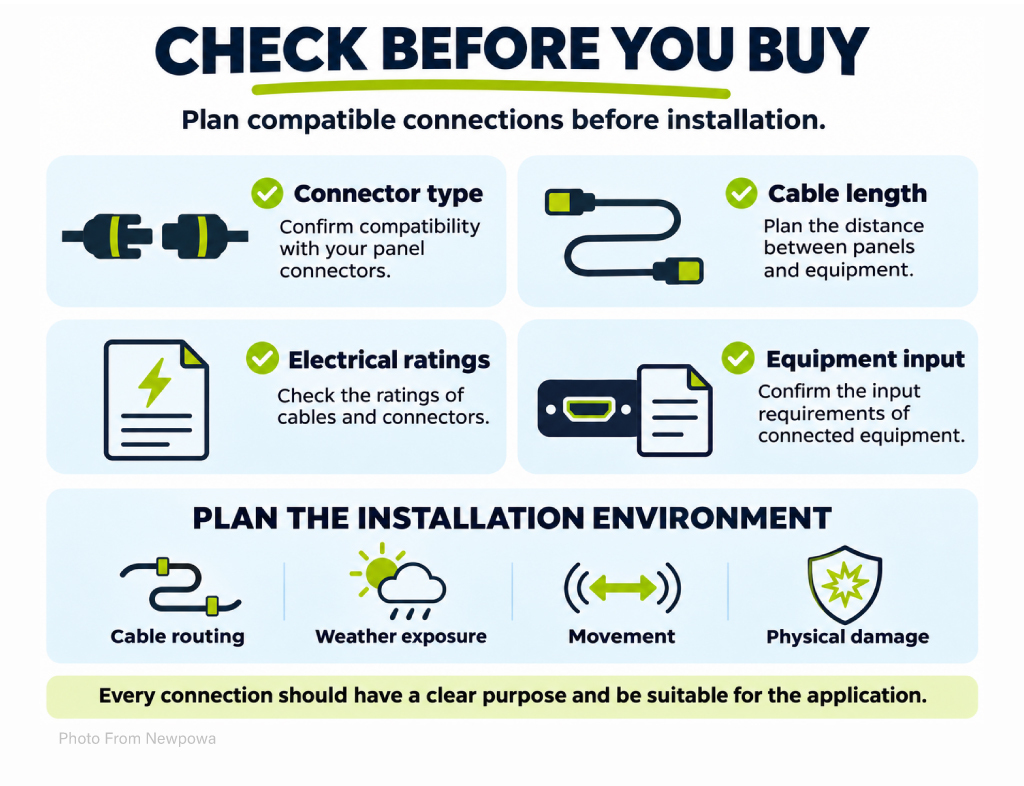
The best time to check compatibility is before installation
It is tempting to purchase panels first and work out the accessories later. Sometimes that approach works. Other times, it leads to extra adapters, unnecessary cable runs, and last-minute changes.
Before ordering components, check the panel's connector type, cable length, electrical ratings, and the input requirements of the equipment it will connect to.
For a more permanent installation, consider the cable route and where connections will be exposed to weather, movement, or physical damage.
The goal is not to collect more accessories than necessary. It is to make sure every connection has a clear purpose and is suitable for the system.
Solar panels may be the most visible part of an installation, but a dependable system also depends on the smaller components connecting everything together.