How Many Solar Panels Do You Really Need?
1st Sep 2026
A Practical Guide to Solar Array Sizing
One of the first questions people ask when planning a solar system is simple:
“How many solar panels do I need?”
The answer is not determined by panel wattage alone.
A 100W panel and a 200W panel obviously produce different amounts of power, but the number of panels you need ultimately depends on how much electricity you use, how much sunlight is available, your battery system, and how much energy you want to generate each day.
Whether you're planning an RV system, an off-grid cabin, a boat, or a small remote installation, understanding these factors can help you avoid both oversizing and undersizing your solar array.
Start with your daily energy consumption
The first step is understanding how much electricity your system needs.
Electrical consumption is normally measured in watt-hours (Wh) or kilowatt-hours (kWh).
For example, if a device uses 50 watts and operates for four hours:
50W × 4 hours = 200Wh
You can perform the same calculation for the major loads in your system.
A basic energy list might include:
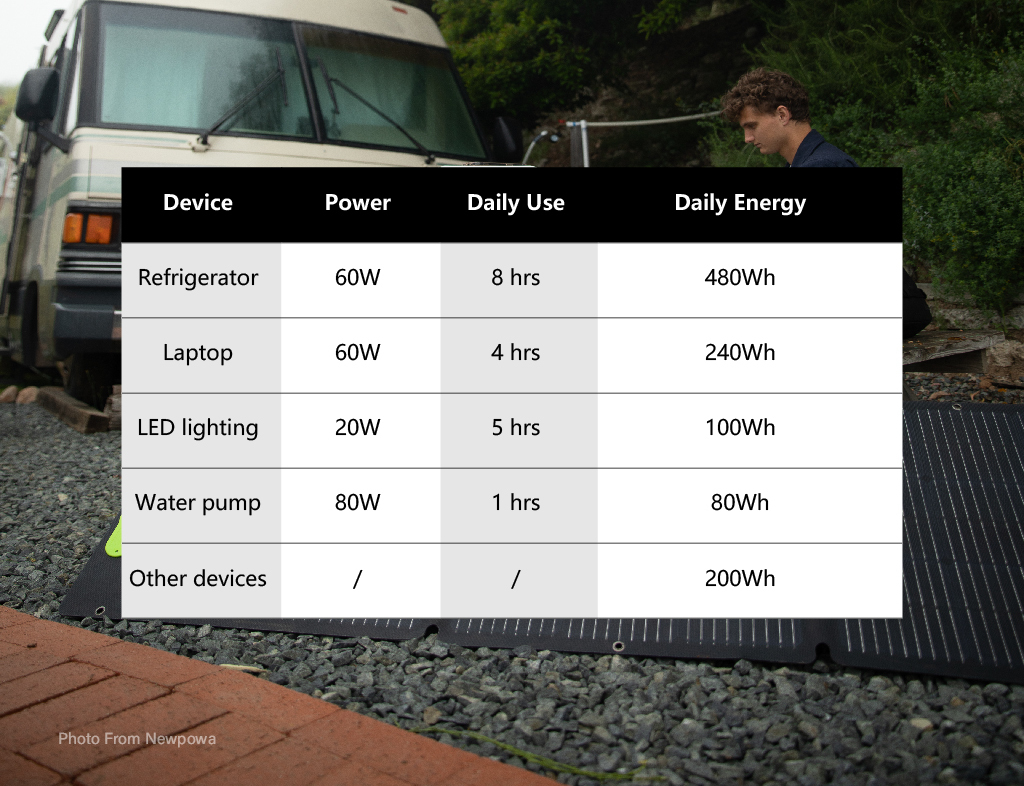
*Actual refrigerator consumption varies because compressors cycle on and off.
This gives you a starting estimate of your daily energy requirement.
Panel wattage is only the starting point
A 200W solar panel does not necessarily produce 200W continuously throughout the entire day. Actual production depends on sunlight, panel orientation, shading, temperature, system losses, and other environmental conditions.
For example, a 200W panel receiving several hours of strong usable sunlight can generate substantially more energy than the same panel operating under heavy shade or poor weather.
This is why solar array sizing should be based on daily energy production, rather than simply adding up panel wattage.
Estimate your required solar capacity
Once you know your approximate daily energy consumption, you can estimate how much solar capacity you need. As a simplified example, imagine an off-grid system requires approximately 2,000Wh per day. If your location and installation provide approximately four hours of useful peak solar production:
2,000Wh ÷ 4 hours = 500W
That suggests approximately 500W of solar capacity under those simplified conditions.
In practice, you would normally want additional capacity to account for system losses, weather variation, seasonal changes, and days when solar production is lower than expected.
Weather and location matter
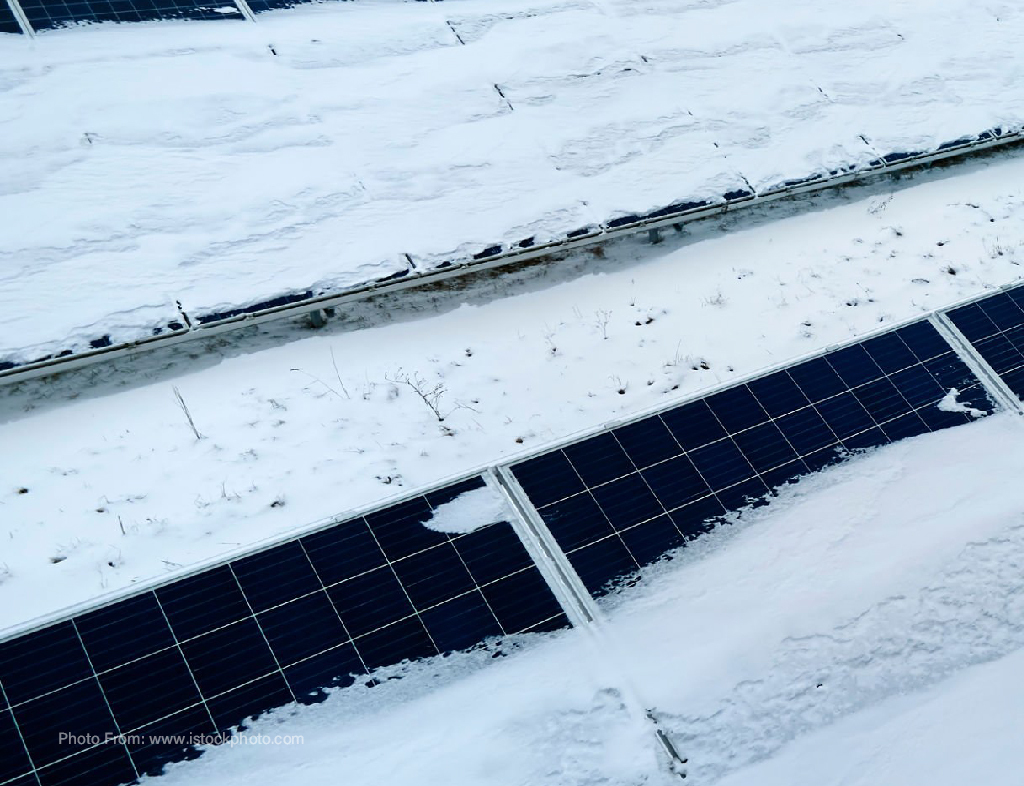
The same solar array can perform very differently depending on where it is installed. A system in a sunny region may receive considerably more usable sunlight than one operating in an area with frequent cloud cover.
Seasonal changes matter too.
If you design a system based only on the best summer conditions, you may find that production falls significantly during shorter winter days.
For off-grid applications, it is therefore important to think about when you need the energy, not just how much energy you need.
Don't forget the battery
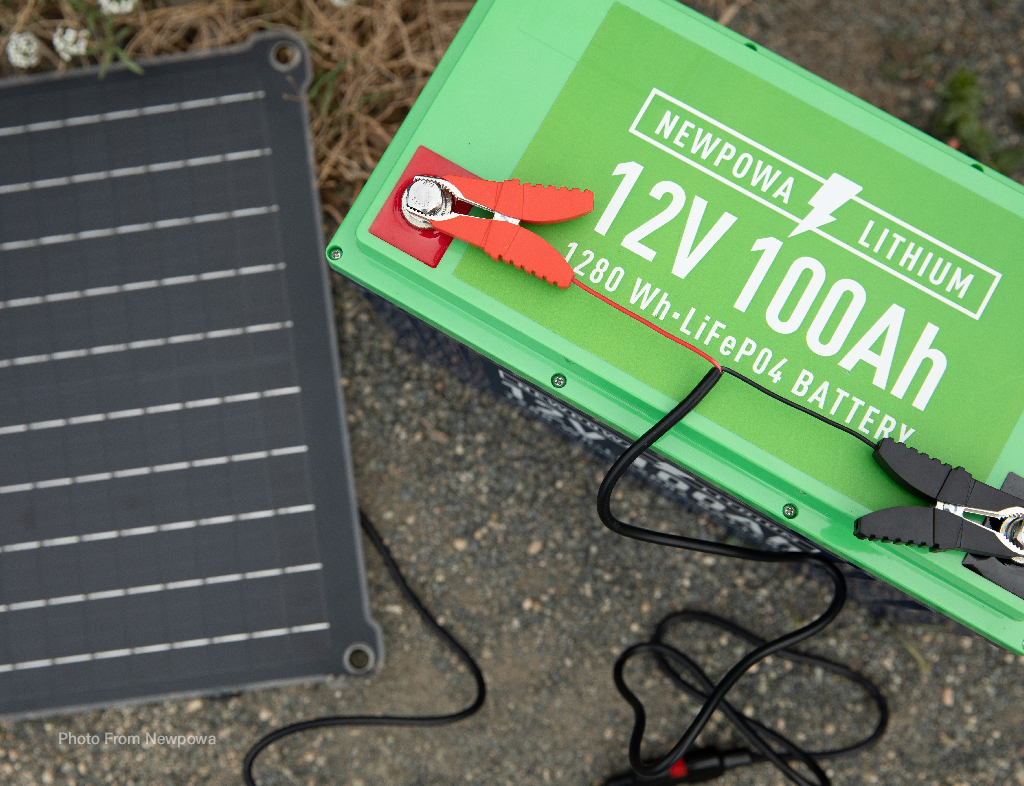
Solar panels and batteries perform different jobs. Solar panels generate electricity during daylight hours. The battery stores energy for later use. If your system produces plenty of solar energy during the day but has insufficient battery capacity at night, you may still experience power limitations. Likewise, a very large battery does not automatically solve the problem if the solar array cannot generate enough energy to recharge it.
A well-designed off-grid system balances:
Solar generation + battery storage + daily consumption
Consider your largest loads
Some appliances can have a much bigger impact on system sizing than their operating time suggests. Heating elements, microwaves, air conditioners, electric water heaters, and other high-power appliances can quickly increase energy demand.
This is why it is useful to identify both your high-power appliances and your everyday background loads.
More panels aren't always the answer
It can be tempting to simply add more panels whenever a system has an energy shortage. Sometimes that is the right solution.
But before expanding an array, consider whether the actual problem is:
- Insufficient battery capacity
- Excessive energy consumption
- Poor panel positioning
- Partial shading
- Undersized wiring
- Controller limitations
- Inverter losses
- Seasonal changes
Finding the actual limitation can prevent unnecessary upgrades.
Series or parallel?
Once you know how much solar capacity you need, the next question is how to connect your panels.
Panels can generally be configured in series, parallel, or a combination of both. The appropriate configuration depends on the panel electrical characteristics and the requirements of the solar charge controller and battery system. For larger systems, voltage and current become particularly important when determining the appropriate configuration. Always check the panel specifications and charge controller limits before connecting multiple panels together.
The best solar array is therefore not necessarily the largest one. It is the one that provides an appropriate balance between energy production, battery storage, available space, cost, and actual usage.
Final thoughts
Calculating the number of solar panels you need doesn't have to be complicated. Start with your daily energy consumption, estimate the available sunlight, consider system losses, and then account for battery storage and seasonal conditions.
From there, you can determine whether a smaller system is sufficient or whether additional solar capacity would provide the reliability you need.
Whether you're powering an RV, boat, cabin, or remote property, taking the time to size the system properly can make your solar investment more useful—and your time off-grid much easier.