Beating the August Heat: Can a 100W Solar Panel Run a 12V Camping Fridge?
9th Aug 2026
August is one of the busiest months for camping, overlanding, and RV travel. It's also one of the toughest months for keeping food and drinks cold. As temperatures climb, many campers start asking the same question: Can a 100W solar panel keep a 12V camping fridge running throughout the trip?
The answer is yes—but only when the entire solar system is designed correctly. A solar panel, battery, and charge controller all work together, and understanding how each component contributes will help you avoid running out of power when you need it most.
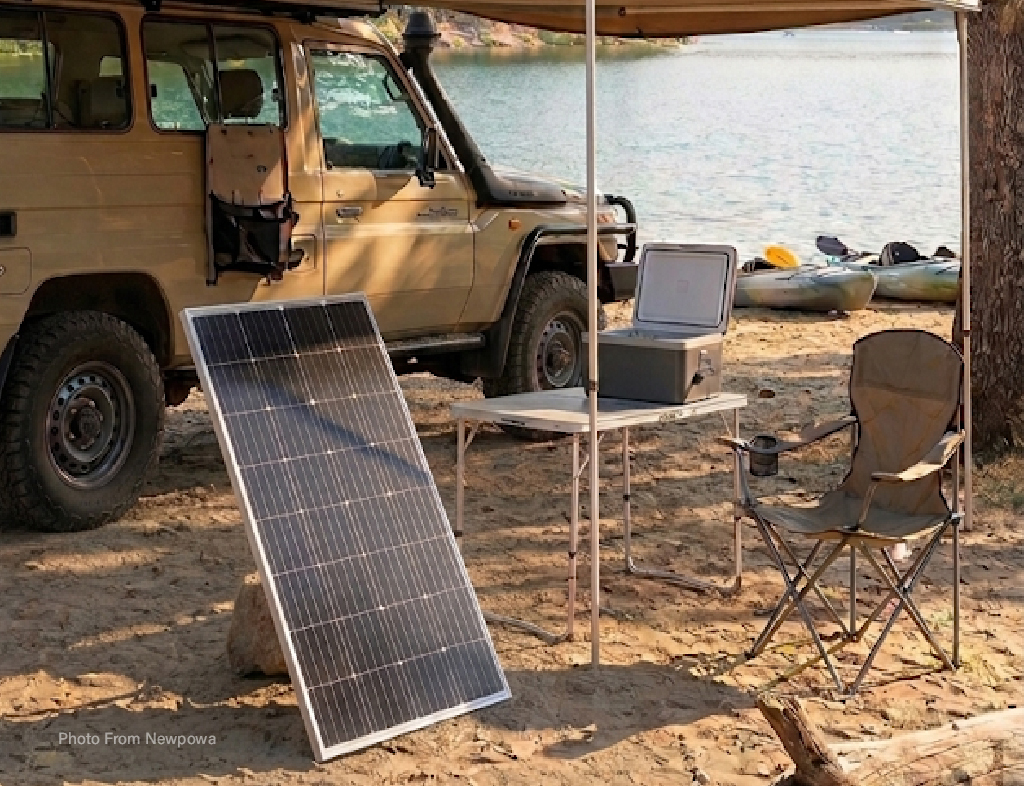
A modern 12V compressor camping fridge is surprisingly efficient. Unlike household refrigerators that cycle frequently throughout the day, portable compressor fridges are designed specifically for mobile and off-grid use. Under normal summer conditions, many 35–50L models consume between 300Wh and 500Wh of energy per day, although the exact amount depends on outside temperature, thermostat settings, and how often the lid is opened.
A 100W solar panel can generally produce between 400Wh and 600Wh of energy during a sunny summer day, assuming around five to six peak sun hours. While this doesn't mean the panel constantly outputs 100 watts, it does mean that under favorable conditions, it can generate enough energy to replace much of what a camping fridge consumes each day.
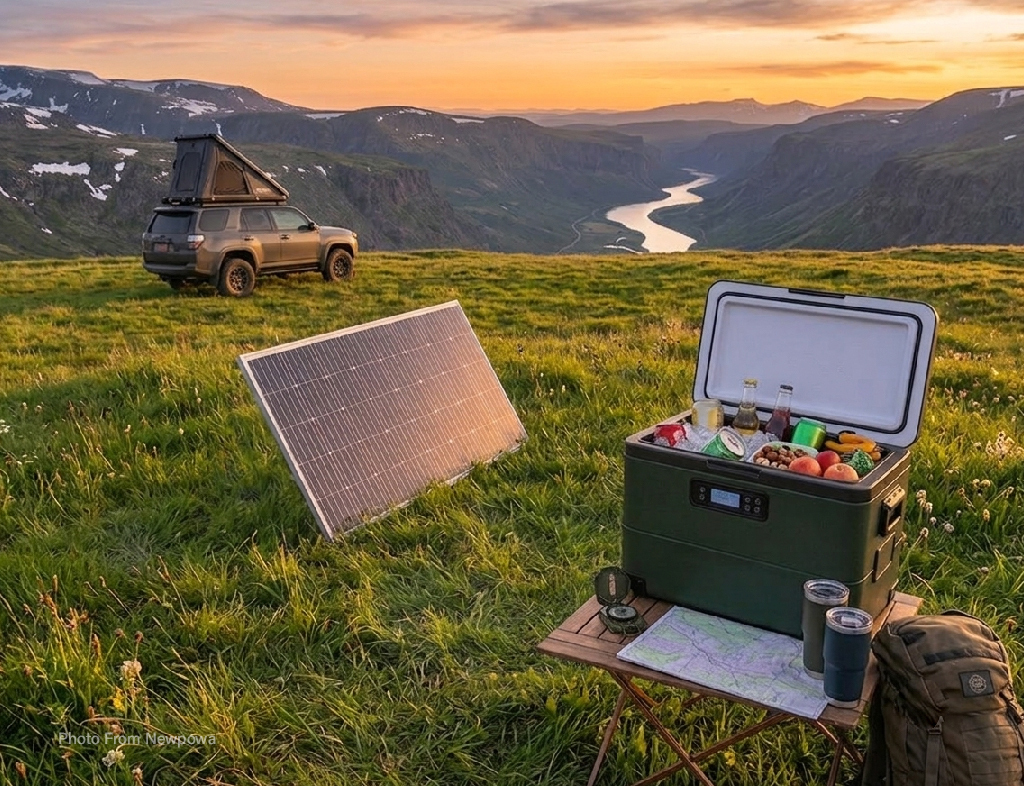
What many first-time users overlook is that the solar panel isn't powering the fridge directly. During daylight hours, the panel charges a battery through a solar charge controller, and the battery supplies stable power to the fridge throughout the day and overnight. Without sufficient battery storage, even the best solar panel won't keep your refrigerator running after sunset.
For many weekend camping setups, pairing a 100W solar panel with a 100Ah LiFePO₄ battery creates a practical balance between portability and runtime. During sunny weather, this combination is often capable of supporting a camping fridge while also charging small devices such as phones, cameras, or portable lighting. If your trips regularly extend over several cloudy days or you plan to power additional equipment, expanding the battery capacity or adding another solar panel will provide greater flexibility.
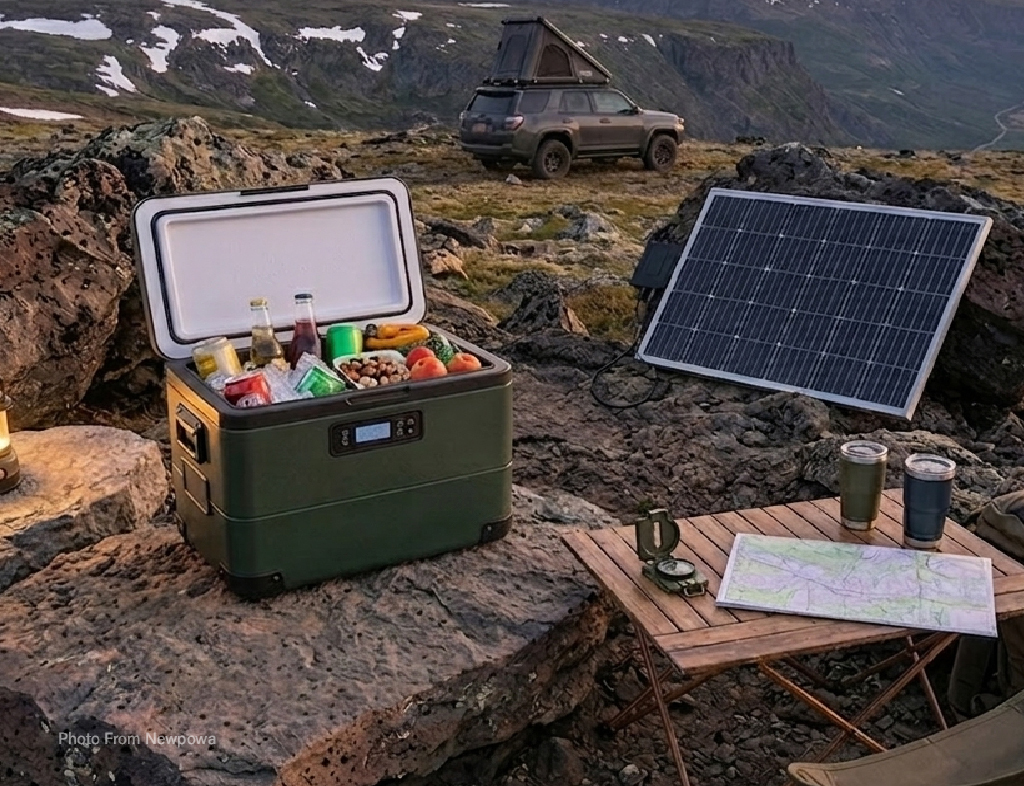
Summer conditions also play an important role in overall performance. High temperatures increase the amount of time a refrigerator's compressor needs to run, which naturally increases power consumption. Parking your vehicle in direct sunlight may be convenient for solar charging, but it also forces the refrigerator to work harder. Many experienced campers choose a different approach by parking in the shade while placing a portable solar panel several feet away in direct sunlight. This helps keep the vehicle cooler while allowing the solar panel to continue charging efficiently.
Another factor worth considering is the type of charge controller used in the system. MPPT charge controllers typically harvest more energy than PWM controllers, particularly during mornings, afternoons, or partially cloudy conditions. Over the course of a full camping trip, that extra charging efficiency can make a noticeable difference in maintaining battery capacity and extending off-grid runtime.
Every camping setup is different, but for many outdoor enthusiasts, a 100W solar panel represents an excellent starting point. It's compact enough to transport easily while providing sufficient energy for basic off-grid needs, especially when paired with an appropriately sized battery. Whether you're spending a weekend at a lakeside campsite, exploring backcountry trails, or enjoying an extended RV journey, a properly designed solar system can keep essential equipment running without relying on noisy generators.
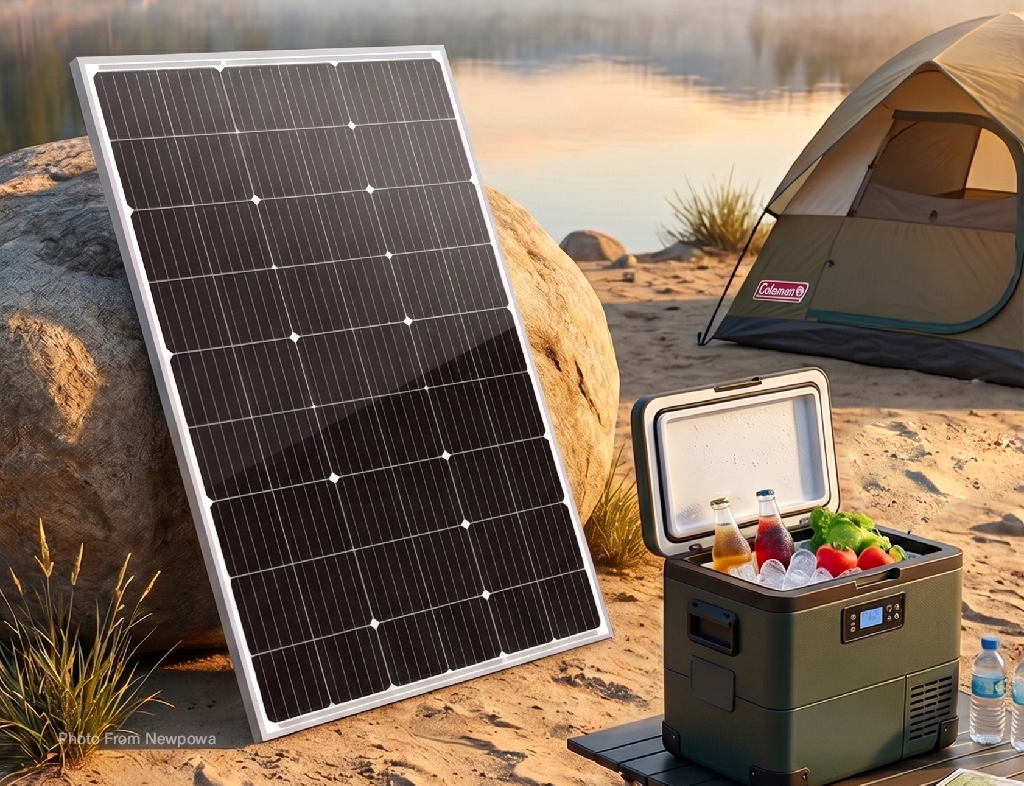
At Newpowa, we offer a wide range of rigid and portable solar panels designed to support camping, overlanding, RV travel, and other off-grid adventures. Combined with quality charge controllers, batteries, and accessories, they provide reliable power wherever the road takes you.
If you're planning your next summer trip, choosing the right solar system isn't just about the size of the panel—it's about building a balanced system that matches your energy needs. A well-designed 100W setup can be the difference between constantly monitoring your battery level and simply enjoying the journey.