
COMPACT SOLAR KITCHENS FOR REMOTE FOOD ENTREPRENEURS
10th Dec 2025
For mobile food entrepreneurs, energy often represents both a challenge and an opportunity. Whether operating a food truck, a pop-up kitchen, or a weekend market stand, success depends on maintaining a steady and reliable power source. Compact off-grid solar systems now make it possible to run efficient, quiet, and flexible operations without relying on fuel-based generators or local grid connections, which reduces both cost and maintenance while increasing independence.
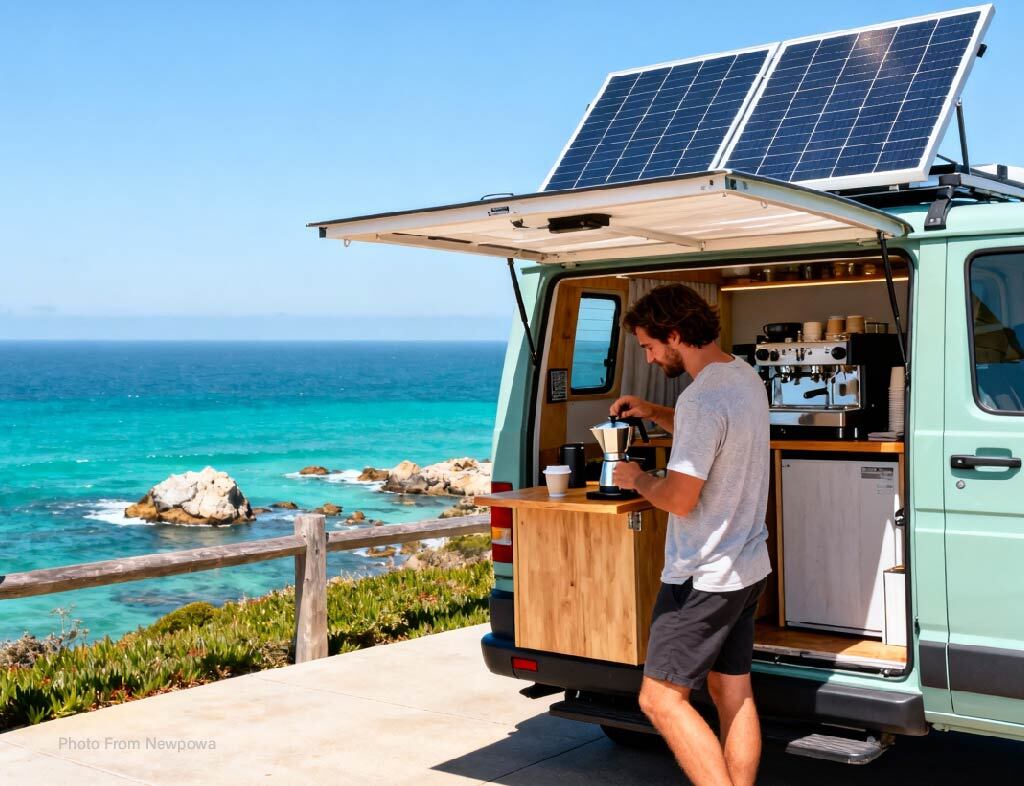
A solar-powered kitchen begins with thoughtful energy planning. Each business follows its own rhythm, where some devices such as refrigerators or water pumps require continuous operation, while others like cooking equipment demand short but intense bursts of power. A well-designed system considers these patterns, balancing solar generation, battery storage, and inverter capacity to ensure smooth and consistent performance throughout the day. Seasonal variations also affect energy planning, since longer daylight hours in summer can quickly replenish storage, while shorter or cloudier winter days may call for larger batteries or a small backup source. With proper design, operators can keep their systems running efficiently across changing conditions without interruption.
Efficiency improves further when cooking or warming appliances are paired with low-voltage devices. Equipment such as lighting, ventilation fans, and display screens can operate directly on DC power, preserving stored energy for heavier loads. When each appliance uses the appropriate voltage and energy-saving measures—such as well-insulated cookers or efficient induction units—the entire setup functions more smoothly. Even compact solar arrays can sustain full-day operation if the energy demand is distributed sensibly and the use of high-consumption equipment is timed strategically.
For new entrepreneurs, solar power also helps lower the barrier to entry. Traditional setups often require significant expenses for fuel, permits, and electrical hookups, which can limit where a vendor can operate. By contrast, a solar system offers a self-sufficient energy source with minimal running costs, allowing owners to start small, test different markets, and gradually expand their power systems as business grows. This flexibility not only eases the startup phase but also allows long-term scalability without major reinvestment.
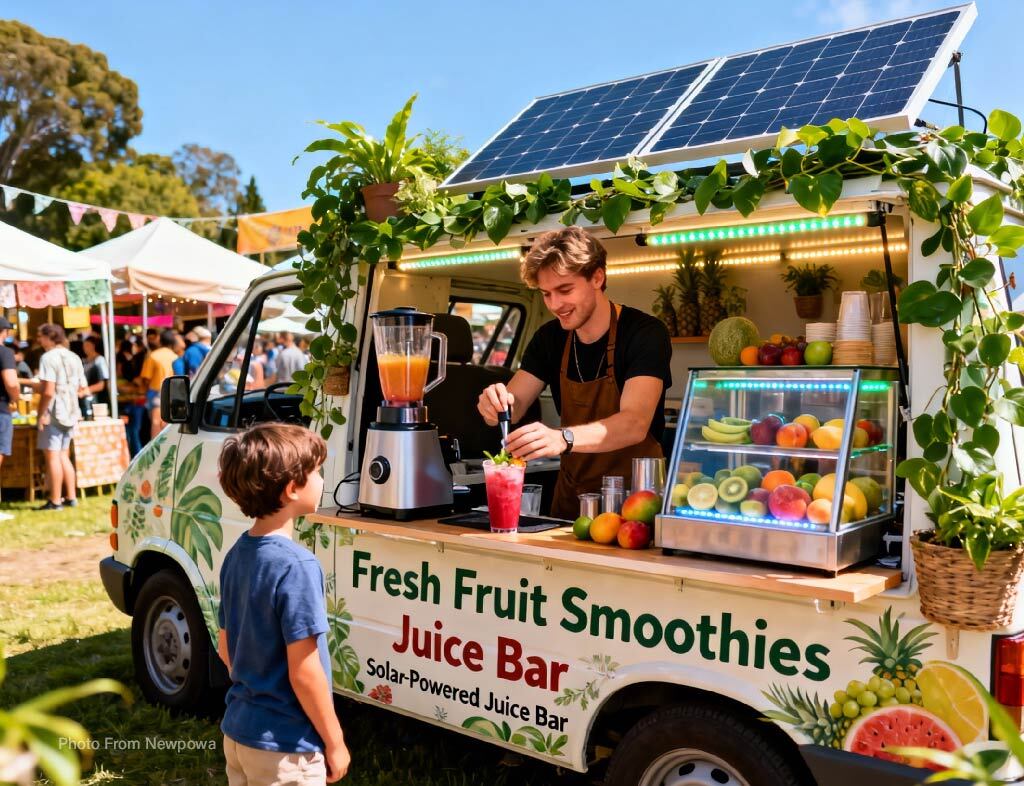
Compact off-grid kitchens are transforming how small food ventures operate by giving them the freedom to cook and serve wherever sunlight is available. With regular maintenance, such as cleaning panels, checking wiring, and monitoring battery health, solar kitchens can remain dependable for many years. The combination of energy independence, mobility, and sustainability gives modern food entrepreneurs a lasting advantage, turning solar power into both a creative resource and a foundation for growth.